
Historical
Background
Europe has
always been fascinating to any serious traveler. From the very early times to
the end of WW II, Europe remained the epicenter of world affairs. It influenced
all aspects of human development. Many civilizations flourished during this
period –cities such as Rome, Athens, Paris, Berlin, Warsaw, became household
names and found a prominent place in our history text books. Europe is tucked
under layers of history, much like a book, full of culture, music, art and
architecture sharing space with monarchy, anarchism, bloody wars, religion,
adventure and more. In the midst of this captivating landmass, is juxtaposed
the ancient countries of Spain and Portugal. As if running away from Europe,
the Iberian Peninsula jets out into the Atlantic and pretending to enclose the
Mediterranean into a private pool of the rich and the famous. S and P stand in
the crossroad of many cultures and civilizations.
Even as a
casual tourist, it is extremely important to know a little about the history of
the places he wishes to visit. One will be able to appreciate the country
better.
Tucked away
in a corner and closer to the African landmass, Spain and Portugal have always
been slightly different from the other European countries. Africa is less than 16 km to the South
at the Strait of Gibraltar. Strife among
the aristocracy, famine and chaos throughout the peninsula, the Visigothic
kingdom was falling apart. This paved the way for the Muslim (sometimes
referred to as Moors) invasion of 711, which set Spain’s destiny quite apart
from that of the rest of Europe.
This influenced Portugal also to a very large measure. Within a few years the
Muslims had conquered the whole Iberian Peninsula. Muslim political power and
cultural developments centered on Cordoba (756–1031), then Seville (1040–1248) and lastly Granada (1248–1492). For 700 years the Christians waged a battle to overthrow the
Moors. Finally The Christian ‘Reconquest’ of the Iberian Peninsula which began
in about 722, ended with the fall of Granada in 1492. The Jews also played an important role in shaping Spain. It is said
that every aspect of Spanish life has a touch of Islam. Spanish language has
many Arabic words, its music has an Arabic tone and its culture has more Arabic
influence than the European. Ironically, today there are very few Muslims in
Spain
With an
area of 505,992 square kilometers, Spain is the fifth largest country in Europe.
In comparison, India is 6 times larger. Spain is about the same size as
Rajasthan and UP put together. Official language is Spanish. It supports a
population of 47 million people with a density of 93/KM sq. (is lower than that
of most Western European countries)
Whereas, we have 1.27 billion with staggering density of 372/KM sq.
India is 27 times more populous than Spain.
No write up on Spain and Portugal is complete without the mention of their sea faring traditions. Both these nations have a very rich maritime history. Wiki records” The Age of Discovery started with the Portuguese navigators. Prince Henry the Navigator would start a maritime school in Portugal. The resulting technical and scientific discoveries led to Portugal developing the most advanced ships and caravels, that for the first time in history would make truly global maritime navigation possible. It led to the Portuguese Kingdom discovering and mapping most of the Globe. The route to India via the Cape of Good Hope was discovered in two phases. The Second phase would take Vasco da Gama around the southern tip of Africa and on to India and the East. Vasco da Gama's pioneering sea voyage to India is one of the defining moments in the history of exploration. It was the first time in history that humans had navigated from Europe around Africa to Asia. It also led to the discovery of Brazil and South America. It would also be a Portuguese nobleman, Ferdinand Magellan that would be the first man to sail around the world. Christopher Colombus set sail in the Santa Maria on what is probably history’s greatest voyage of discovery on August 3, 1492. He returned home in 1493 to a hero's welcome
These
discoveries placed Spain and Portugal alongside Britain and Netherlands in
establishing their empires around the globe. Interestingly, between themselves
they divided the world outside of Europe into two, at the Treaty of Tordesilhas
in 1494. Portuguese
Empire was the first ‘Global Empire’ in the world. They set up 3 colonies in
India, 26 in Africa, 3 in North America, 4 in South America, 22 in Asia.

Figure 1- Portuguese Influence
Similarly
the Spanish Empire extended all over the globe. It was twice the size of
Portuguese Empire and many times larger than the Mauryan Empire covering whole
of India. Beginning with Columbus' explorations of the late fifteenth century,
Spain took the lead in developing an empire in the New World. The Spanish
Empire extended across most of the Americas and into Asia in the sixteenth
century. Possessions were developed in Africa

Figure 2 - Spanish Influence
In tandem,
their languages also spread far and wide – Spanish more than Portuguese. It is
widely spoken all through Latin America with over 380 million Spanish speakers
estimated worldwide. About 250 million people
speak Portuguese.
With this very
rich and varied legacy beckoning our curiosity, twelve of us decided to visit
Spain and Portugal. Self and Jai, Kats and Navin, Nair and Sudhi, Dore and
Lalitamma, Sunder and Saroja, Prem and Bina formed the group. We joined the
‘Iberian Explorer’ tour operated by UK based travel firm ‘Trafalgar’ .The tour
commenced on 20 April and ended on 03 May 2013.
Spain and Portugal as we saw
The cities
in Spain are very picturesque, clean and very well laid out. The cities have
developed over centuries and phenomenal effort and planning has gone into
maintaining a balance between the old and the new. They together represent a
special kind of architectural brilliance – probably unique to European cities.
There is ample evidence of Islamic influence. The Muslims introduced tiles, red
bricks, mirrors, pillars and minars amongst other things. The cityscape is full
of history – dotted with monuments, statues, parks, avenues, promenades and the
rest. This feature is common all over the country. At least to an outsider,
Spain radiates a certain feeling of aloofness and reserve – unlike maybe
Athens, Rome or New York – who are more spontaneous – shop keepers and waiters
in restaurants appear to be edgy and detached – probably no time to fool
around.
The weather
was excellent during our entire stay. As one goes south and towards the coast, the temperature drops.
Lisbon was at 4 deg C with gusting winds and outskirts of Madrid experienced an
unusual snowfall. The rain god has been very kind to Spain this year and we
were told that all the lakes are full. March 2013 was the wettest year in Spain
in 70 years.
What
strikes an observer most– especially one from India – is their near empty roads
– few cars and fewer people. In many places the roads are deserted. This aspect
stares you in the face when you travel on the high way – absolutely devoid of people
and animals – except for an occasional sighting of wild horses, bulls, pigs
and storks roosting on electric poles. There are hardly any policemen on the
road and the traffic is very disciplined - one stands to loose driving license for over speeding. At least in Spain we did not find any
beggars – however they were a few in Lisbon. Most of the apartments are up to
nine floors and sky scrapers are an exception.
English is not spoken widely, and at
times it becomes extremely difficult to convey a message. We had seven
vegetarians in our group, who found it very hard to get a meal devoid of ham or
tuna or some other form of meat. It’s advisable to carry a list of frequently
used sentences in Spanish or Portuguese such as – please do not put any meat,
fish, chicken, pork etc in my food, how much does this cost, etc. Sign language
will always be there to rescue.Spain
is one
of the most advanced countries in the development of solar energy,
and it is one of the European countries with the most hours of sunshine. Since
2010, Spain has been the world's leader in concentrated solar power (CSP). 10% of
Spain power requirement is met by solar energy.
An interesting bit of trivia;
Spain’s national anthem has no words.
Tourism plays
a major role in the economy of S and P. The cities are full of tourists –
Japanese, Chinese, Russians, Americans and many more who throng the
attractions. A repot states “Tourists to Spain spent 3.28 billion Euros in
March, an increase of 13.7%”. Tourism in Portugal has developed significantly and
generates approximately 5% of the wealth produced in Portugal. In comparison tourism
in India generated $121 billion or 6.4% of the nation's GDP in 2011.Spain produces 50% of world
Olive oil. Cork and wine contribute in large measure to the countries’ economy.
One sees a
number of couples in their mid thirties with babies in a pram – probably they
wait to settle down in their jobs, buy a house, bank balance etc before adding
an additional member to the family. Young couples receive a lot of support from
their parents – who look after the kids when the parents are at work.
There was a
lot of talk about how the economy of S and P is in a bad shape, rampant
unemployment, bailout packages from the EU, spiraling prices and much more. But
to a casual observer, things appear normal – the public services continues to
work efficiently, the roads are clean, garbage is removed, buses and trains
run on time, uninterrupted power and water supply, one did not see any signs of
poverty – On the whole they love to crib and crack jokes about their economy and
the government. Come on – things are not that bad – visit India and you will
appreciate your country even more. Collapse of real estate, unbridled
government spending, inefficient tax collection, privatization of public
companies et all have contributed to the present economic crisis. Education,
medical care and government civil projects have been badly hit due to the eco
down trend.
Throughout
our stay we did not see any cloth lines hanging in any of their balconies –
instead decorated with colorful flowers. It’s a pleasure to watch the facade of
these houses – each window is designed differently with varying colours.
As a
tourist it’s good to buy your beer, water and other things of daily necessity
from a departmental store – it works out much cheaper. Outside of Hotel, travel
and breakfast one can manage on 20 Euros a day – a very conservative estimate – with
an occasional beer, wine and a meal or two in a restaurant and some souvenirs. All
their cities are very well geared to woo the tourist. City centers and market
places are full of cafes selling tapas, coffee, wine and beer. There is little
or no pollution in the air. It’s good to carry a small kettle with you to make
the early morning coffee or tea – none of their hotels provide the
complimentary water, tea or coffee. Also carry a pair of bathroom slippers.
Both the
countries remained neutral during WW I and WW II and spared the ravages of war
– the people go about their daily activity in slow time and there is no
unnecessary hurry – which I think is a good feature.
Barcelona – 20 and 21 April
We landed
in Barcelona in the late afternoon and were taken straight to the hotel – ‘Abba
Garden’ located in the outskirts of the city. The city is well connected
through a net work of taxis, buses, trams and metro. Unfortunately we missed
the duty free shop in Barcelona airport – we landed on a 13 day trip without
any fire water. Baptism by Fire was scheduled soon after checking in. We
immediately ventured out in Barcelona in search of tipple. After a long walk we
reached ‘El Corte Inglés’ - another interesting fact – scotch is slightly
cheaper than the duty free. With our confidence restored we took city bus ‘Line
No 21’ and returned to the den for a bit of much needed Elixir prior to dinner.

Figure 3 – Beaming with confidence
In all we
were 52 tourists from various places across the world- India, America, Canada,
Australia, South Africa, Jamaica, Malaysia etc. As expected the first, the
second and the third world people sat together like in ‘Rummy’- a card game –
where in a player arranges similar cards
in a suit to make a sequence of sorts – few jokers sat in empty chairs -to
enjoy the dinner and listen to briefing by our tour director Mr David Nadal.
There were fourteen Indians which made up almost 25% of the crowd. Trafalgar
briefing is extremely thorough. Departure, arrival, day’s activities, luggage
pickup time, trivia and interesting tidbits are covered in detail by the tour
director to make the day interesting.
Barcelona
is the capital of Catalunya and the second largest city in Spain, after Madrid.
About five million people live in the Barcelona metropolitan area. Barcelona
is the Mecca for architects with Gaudi’s brilliance at display all over the
city. Wiki says “Antoni Gaudí was a Spanish architect born in Catalunya and figurehead of Catalan Modernism. Gaudí's works reflect his highly individual and
distinctive style and are largely concentrated in the Catalan capital of Barcelona,
notably his magnum opus, the Sargada familia”. Gaudi famously declared ‘there are no straight lines
in nature’– therefore his work had nothing but curves. The story goes that
when an influential society lady asked Gaudi to design a piano for her (think
of the straight keys) he replied, “My dear lady, why don’t you learn another
instrument?”
We saw the famous ‘Barcelona
stadium’ - we were informed that the entire stadium with a capacity of 96,000
can be evacuated in 11 minutes flat – fantastic. We went for a stroll in the ‘Catalunya
Square’ – one can see tourist and Spaniards coming out in large numbers to enjoy
a bit of sunshine on their Sunday outings with their families. The square
brings out the best of Barcelona. The avenue is lined with shops and eateries
to help tourist spend their time. One can sit for hours with a glass of beer
and watch people go by. Barcelona has been adjudged as the 5th most
visited city in the world in 2012. We were cautioned to be careful of pick
pockets.
We celebrated Lalitamma’s 70th birthday with cones of delicious ice cream. We all wish her a long and healthy life.
We celebrated Lalitamma’s 70th birthday with cones of delicious ice cream. We all wish her a long and healthy life.

Figure 4 – Lalitamma on her 70th birthday. Interestingly we were in
Xian - China on her 68th birthday with the same group.
Throughout
our stay the weather was excellent - between 14 to 20 deg C.
In the
evening we went for a traditional dinner with fresh salad, tapas, paella and
the rest with Mario playing harmonica.

Figure 5 - David Nadal- our tour director and 14 day friend,
philosopher, guide and standup comic.No relative of Rafeal. Nadal is a very
common name in Catalunya.

Figure 6 - The Indian table with our friend from Australia

Figure 7 - A view from the hotel - Abba Garden

Figure 8 - Barcelona city sky line from Montjuic. The famous
‘Bullet’ at the back. Bullet-shaped skyscraper – Agbar Tower, representing modern architecture in
Barcelona,

Figure 9 – Sargada Familaa from a distance

Figure 10 -Sargada Familaa
from near

Figure 11 - A street entertainer making a giant soap bubble

Figure 12 - Museu Nacional d'Art de Catalunya and Les Quatre
Coloumnes

Figure 13- City council bikes - clean and orderly

Figure 14- Expo site

Figure 15 - Enjoying a joke with Bob from Texas. Bob was great company
and resembled George Bush a lot.

Figure 16 - Catalunya square - avenue

Figure 17 – Place de Cataluña – the gang

Figure 18 - The extraordinary balconies

Figure 19 – Gaudi’s creation Casa Batllo.
An apartment building designed entirely by
Gaudi and considered his masterwork.


Figure 21 – Communication Tower

Figure 22 - Street Musicians - Catalunya Square
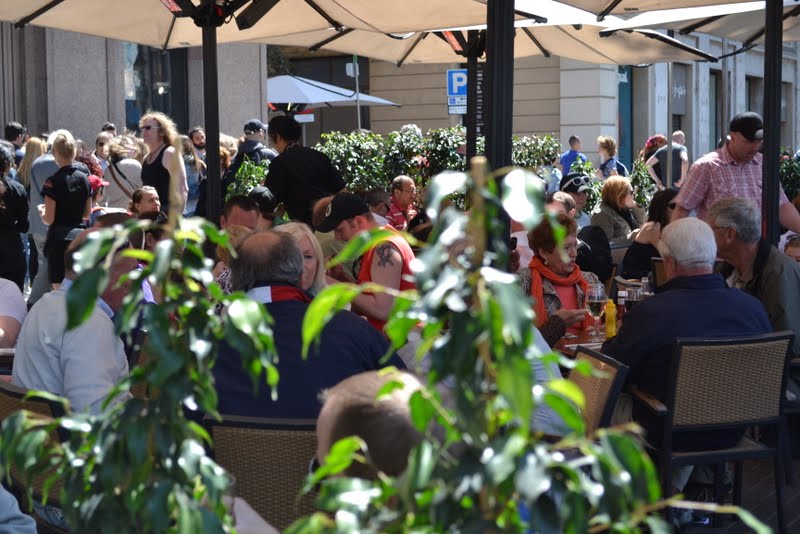
Figure 23 - Hard Rock café on a Sunday afternoon
Visit to Park Güell
Park Güell
was commissioned by Eusebi Güell who wanted to create a stylish park for
Barcelona aristocracy. Park Güell is a garden complex witharchitectural elements situated on the hill of El Camel in the Gracia district of Barcelona, It was designed by the Catalan architect Antoni Gaudi and built in the years 1900 to
1914. Every corner of the park displays the architect’s passion for nature’s
forms: Gaudí wanted human intervention in this forest to blend in with the
landscape, to complement it, and he certainly achieved this. Snails, mushrooms,
leaves, flowers, tree trunks and elephants appear constantly in the mosaics and
in the architectural forms. Even the bell in the chimney of the concierge’s
house is shaped like an inverted mushroom.

Figure 24 - Gaudi’s house where he stayed for 20 years. Guell Park

Figure 25 - Guell Park - A rare photo op for me

Figure 26 - Jai enjoying the architecture - Guell Park

Figure 27 - Guell Park - An uninterrupted view of the terrace walls.

Figure 28 - Guell Park

Figure 29 – Mosiac work Guell Park

Figure 30 - Guell Park - Bird nests built by Gaudí in the terrace
walls. The walls imitate the trees planted on them.


Figure 32 – Front view. Mosaic lizard, Park Güell.

Figure 33 - Guell Park

Figure 34 -Guell Park

Figure 35 - Sea front restaurant for dinner

Figure 36 – Tiuglado Monchos

Figure 37 - Mario on the harmonica
The
night ended with lots wine and good food as any nice day should end. Food was
lovely and I tried the sea food tapas - the best pick being octopus. The
vegetarians had varieties of cheese, bread, tomato paste, fried brinjals, onion
and green chilies along with paella. All this was followed by excellent lemon
sorbet for dessert. Throughout the dinner Mario played some excellent music on
the harmonica – including a few Raj Kapoor hits – much to the merriment of the
Indian audience.
Two days in Spain was sufficient to convince all of us about its beauty - we returned to Abba Garden full of anticipation and excitement.
Two days in Spain was sufficient to convince all of us about its beauty - we returned to Abba Garden full of anticipation and excitement.


