Sunday, January 16, 2011

I went to Riga, Latvia

Unknown to me, Treaty of Peace, Friendship and Cooperation was signed between India and the Soviet Union on 9th August 1971. The Indian Navy immediately thereafter embarked on an expansion drive which continued till mid eighties. In the mean time the navy decided to send me to Riga the capital of Latvia to commission a Nanuchka class - Missile Corvette, an armed naval escort vessel, smaller than a destroyer. Maybe, the navy selected me because I was one of the school children who went to cheer Mr Khrushchev - Leader of the Communist Party of Soviet Union and Mr Bulganin, during their visit to Bangalore on 26th November 1955 near Lalbagh East gate.


Figure 1 - Nanuchka class Missile corvette - Net
I got married on 22 May 1977 and very reluctantly returned to Mumbai in early June to commence my Russian language course. Mr Jadeja was our Russian language instructor, who paid more importance to grammar than vocabulary and as a result, I could conjugate verbs easily but did not know what potato in Russian was.17th October was my wife’s birthday and after a hectic bout of partying we reached the airport. Our team consisted of eight officers and forty sailors. The airport was full of relatives bidding good bye and dolling out advice. Someone said ‘distance makes heart go wander’ and yet another said ‘there is always safety in numbers’ and so on. I felt terrible leaving Jai behind, who was by then five months pregnant. We left Mumbai in a chartered Air India flight to Moscow via Tehran.

Travelling is fun, especially in a big group, where in you know each other. My colleague KB knew one of the airhostess and we were looked after like Maharajas the rest of the trip. After a short halt at Moscow, we reached Riga and directly went to our Stalavaya (guest house) in Bulderaya Bulli in the outskirts of the city. The Stalavaya was located very close to Daugava River. We were in Riga for three months taking over the ship from the Soviet navy, which meant going to the naval jetty every morning and accepting the ship from Soviet naval officers.

Only the essential sailors had come for the acceptance and the cooks and stewards were to join later. The Stalavaya was run by a posse of female Russian cooks and the one attached to us was ‘Katia’ an elderly lady who used to go out of the way to make us feel comfortable. In addition to the normal fare of bread, butter, eggs, milk, chicken and rice they had a variety of cheese, ice cream and curd to go along. We used to drink lots of Borscht (soup) and Sok (boiled fruit juice) for all meals. Kartoffel (potato) was a part of their daily diet. With my limited Russian vocabulary I once ordered a plate of ‘Portphel’ salad meaning - Briefcase. There were many more blunders – In a restaurant, I once asked the waiter if I could Chicken - ‘Kuritsa’ instead of smoke - ‘kurit’. It was big task for Katia to feed three pure vegetarians amongst us - NL Sharma, Atutosh Anand and Sashi Khera. She finally invented a lovely sauce made of red chilies, onions, garlic and sugar. Katia’s sauce went very well with hot steamed rice and butter. Finally our cooks arrived in end November and took over the kitchen. Dal, Sambhar, puri bhaji, biryani, pakoda and the rest adorned the table. Petty Officer Cook Chennakalai became a hit in the galley and many Russian officers shifted their culinary loyalty.

Wiki says “Riga is experiencing a new Renaissance as the capital of Latvia , and many large-scale restoration projects on old buildings have made Riga one of the most attractive cities in Europe. Most famously, Riga is home to the largest concentration of Jugendstil (German Art Nouveau) architecture in the world. Riga has become an increasingly popular destination for Europeans drawn by its old town image, its historical importance, and its reputation as having the best nightlife in Europe ”. Riga was greatly influenced by Germany and Russia through the two world wars and it finally became independent On September 6, 1991.

Riga is a very pretty city especially in winter. When we arrived in October the temperature was around 8*C and it fell rapidly and reached - 4*C by January. I was experiencing snowfall for the first time and all of us went berserk playing in the snow like children.


Figure 2 – Town hall square – Riga - Net

Finally the Daugava River froze completely, resembling a never ending white bed spread thrown across the river. What an extraordinary sight. Within days the frozen river was full of children practicing ice skating and playing hokey, while the elders were fishing. We also tried our leg at ice skating – an extremely difficult sport – contrary to what one sees on the TV. 54% of the area of the city is made up of so-called "blue zones" (rivers, lakes and canals) and "green zones" (woodland, parks and urban squares), which makes Riga special.

Figure 3 - Posing in the snow

It takes time to get used to Russian winter – ask Napoleon and Hitler – they would have had a lot to say. My experience was limited, but comic. Gopalachari and I decided to visit Moscow and in December. Having finished viewing the change of guard at the Lenin's Mausoleum in Red Square, I proceeded to stand in a pre designated place and wait for my shipmate. The temperature was –12* C. The ears became red and looked like frozen red meat. I was unable to stand, as the cold was seeping through the heel, in spite of wearing snow shoes, with inner fur lining, with two layers of woolen socks, each one being separated by a sheet of news paper cut to size to act as insulators. All this was of no help; it was Kadam Tal for 15 unbearable moments of my life.


Figure 4 - Maybe I waited for Chari on the left side - Net

Another incident of interest was an evening out in Riga. All the ships officers were invited to Hotel Riga for dinner by our Russian team leader Mr Savitsky, which meant a very simple operation of getting into a bus in our Stalavaya and alighting at the hotel. Never in confrontation with the elements. So Prem and I decided to dress, as if we were going out for a stroll in Mumbai. I had never been so totally wrong. During the journey the bus driver stopped at a petrol station and asked all of us to get down before filling in fuel. Well, the rules in USSR required that there should be no passengers in the bus when it fuels. The rest is cold history. Two of us being slowly frozen at -5 deg C.

On our sea voyage from Riga to Klaipeda in Lithuania was yet another extraordinary feat. Ahead of us was an ‘Ice breaker’ – breaking through layers of frozen sea and making a passage for our ship. Suddenly you would see the breaker stop and sailors coming out of the ship, to take a walk and a puff. The entire mast and the super structure were totally frozen by the time we reached Klaipeda.

In our short stay of three months in Riga, we were able to visit the city many times. I still remember having excellent decoction coffee near the railway station. We used to visit Hotel Riga often on weekends and have Vodka and Balzam (Refined vodka) Russians truly believe that ‘Vodka is a drink that accompanies humans in sorrow, joy, and simple relaxation’. Stolichnaya chetyre (Four) Star Vodka was most preferred. You drink Vodka neat and say - Prost – Davai and it goes down the hatch. Thereafter you chase the vodka with Sok and then stuff it with – cheese, chicken, gherkins, kielbasa (smoked sausages), bread and layers of butter. One always imbibes vodka to celebrate something or the other. To start with, it’s always ‘Indo- Soviet Druzhba’ (friendship), then a drink for the health of the two great navies, one for the ship, yet another for the good people of the two countries and so on; this entire process is repeated several times before you pass out. I am yet to come across anyone who can match a seasoned Russian in vodka drinking. I still remember getting caught with my friend and shipmate Anatoly Zotov – drinking vodka to celebrate ‘Artillery Day’. In Russia you order your drinks in milliliters and not in pegs. Russians love Indian rum and a bottle of Hercules XXX rum would fetch 3 bottles of vodka in the Stalavaya. I think it’s time; khodays took over the Indian embassy in Moscow – hic hic hooray.

Figure 5 - Self and Prem out in the snow

On a sober note -we also visited Riga Cathedral for a musical concert – watched an Ice Hokey match between Spartak and a local team. However the most poignant visit was to Salaspils concentration camp ‘Stalag-350-S’ established by the Nazis at the end of 1941 at a point 18 km southeast of Riga. We were taken around the camp by one of the survivors. She was a young girl of three, when her parents were executed. As she explains the atrocities which were heaped on them, you stand in shock wondering how; anyone from the same specie could have committed such carnage on a fellow human being.


Figure 6- Salaspils Concentration Camp - Net


Girls in Riga are extremely pretty. The only bachelor in our midst was Prem, who had a whale of time in Riga. I came back with a lovely Latvian doll in a glass case.


Figure 7- Latvian doll image - Net

The people we came across in our day to dealings in kiosk, super markets, restaurants, hospital and so on were very nice, unassuming, simple and friendly. They had a great affinity towards Indians in general. They loved Raj Kapoor and used to throng our weekly movie evenings in the Stalavaya. On 3rd January 1978, I was on my way to the ship in a naval bus, which unfortunately skidded on a heavily iced road and rolled over several times before it came to a stop. By god’s grace and extremely prompt help by the Riga Military Hospital, five of us lived to see another day. The hospital staffs were extremely kind and helpful. Under the Soviet regime the Latvians were not best of friends with the Russians. I still remember my Russian friend asking me to stand in the queue in the local ‘Detsky Mir’ (departmental store) to buy Champagne, the lady at the counter would have certainly said ‘no stock’ if he had stood there instead. Another shortcoming which I found in the Soviet Union was their distribution system. Suddenly onions would disappear and find tomatoes flooding the market. For that matter, one had to stand in a queue to buy anything. The joke those days was that, the people would stand in a queue not knowing what was being sold at the end of the queue. People always carried lot of cash, as they did not know where and when a luxury item would become available.

Children were the most prized possession of Soviet Union. Toys, books, schools, playgrounds, sporting equipment and anything to do with children were subsidized by the state. It was a great pleasure to watch well dressed children playing in the snow.
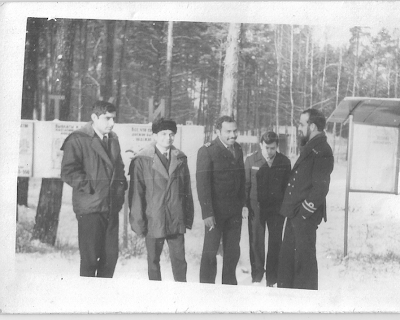
Figure 8 - Sashi,Tiwari,Prem,self and Hukku

In the Stalavaya I shared a cabin with Huku and Prem. Huku was a great snorer and at times it was impossible to sleep with him playing, a one man nasal band. KB who had been to Russia earlier was of great all round help to us. His Russian was very good and it came very handy to have him around. Unlike in India, the dinner was at 6PM and invariably we used to feel hungry around 10PM. KB had converted the double door window into a refrigerator and would store assorted food items in the gap, for any emergency.

Text Color

Figure 9 - Self and Prem having a snow fight

Russians were crazy for any item which had a ‘made in USA’ tag attached to it. I remember one Russian officer who wanted my Wrangler shirt and insisted, I take something in return. Seeing this golden opportunity I decided to ask for a jerry can full of ‘Potentiometer oil’, (an item in short supply but in great demand) which was nectar to my technical officer. Similarly we bartered Nescafe tins for lot of important spare parts.

Figure 10 - May be after effects of Vodka

In the late seventies shopping was a mania with every Indian. Going abroad meant unlimited shopping. The whole family would sit together and make a long list of items to be purchased. I did my share of purchases - KM 8 mixer (a copy of Braun), Zenith SLR camera, (Incidentally, after WW II all the German optical factories went to the Russians and their cameras had excellent lenses) and a large number of excellent toys. I was able to pick up a number of 78 RPM records of Beethoven, Mozart and Tchaikovsky at throw away prices for my wife. Similarly, you could get complete works of Arthur Conan Doyle – Sherlock Holmes for a very paltry amount. I read TOI of 07 Jan 2011 and it said “Indians shed shopper tag, soak in experience”. We have come a long way indeed.

We visited Moscow in December and stayed with a friend in the diplomatic enclave - Leninsky Prospect. Moscow is breathtaking and by any standard, one of the very best cities in the world. Watching their broad roads, majestic buildings, parks, exhibitions – left us amazed and truly impressed. Their metro is simply outstanding. We experienced the much dreaded Russian winter at -12*C, visited the Red Square, saw a Russian ballet ‘Swan Lake’ in the famous Bolshoy theatre and their circus. Travelling in their train from Riga to Moscow and back in soft class was another experience to cherish.

We took nearly 90 days to accept the ship. Each evening we used to hold a ‘sabranie’ (meeting) with the Soviet navy to discuss day’s activities. They would report all the items which were handed over to the Indian navy and end up with ‘I tak dalee’. Prem wanted to be one up and impress our Commanding Officer Cdr BN Kavina and with all seriousness said, sir I regret to report that the Russians have not handed over ‘I tak dalee’. Even the stern looking Russians could not but laugh their guts out. ‘I tak dalee’ meant etc.

The ship was commissioned on 15 Jan 1978. The formal and solemn ceremony commenced with the Inspection of a Guard of Honour by the Soviet admiral.


Figure 11- Self reporting the Guard of Honour to the Soviet admiral

The Commissioning Warrant signed by the Chief of Naval Staff was read out by the Commanding Officer. The Naval Ensign and the National Flag was hoisted onboard the Ship for the first time along with the traditional breaking of the Commissioning Pennant. This ceremony was carried out with the Parading of the Colour Guard to the accompaniment of the National Anthem. The ship was named ‘INS Hosdurg’ (meaning ‘New fort’ in Kannada) after a historic fort in Kerala, built during the Ikkeri Dynasty by Somashekara Nayak. Later on, the wife of the ambassador broke a coconut on the missile container and performed a puja to bless the ship. Earlier on, Moscow had sent feelers that the lady was not used to breaking coconuts even at home; leave alone on a missile container. We had carried the coconuts all the way from India for this occasion and did not want anything to go wrong, so we sawed the outer shell very carefully to prevent any misfire and made it easier to break.


We sailed from Riga to Klaipeda for sea training and stayed there for three weeks. Klaipeda once again is a very pretty place.


Figure 12 - Our ship was berthed very close to the boat restaurant - Net

Thereafter we sailed to Gdansk in Poland and then to La Harve in France – spending 3 days in each port. Whilst in La Harve, I got the news that my dear wife had delivered a baby boy and both were doing fine. I had become a father – a special feeling. I along with my shipmates went along with a Hindi speaking French Naval Intelligence officer, Lt Mark Faber to celebrate the occasion with champagne. We were severely hit by a storm in the dreaded ‘Bay of Biscay’ and had to take shelter in Dourarnenez – South of France – an extraordinarily beautiful fishing port. The whole town came to see our warship and some went on record to say “Nothing as exciting as our ships unannounced visit had happened since WW II”. Cook Chennakalai became an instant celebrity dishing out ‘Kheema with onions rolled in Parathas (Minced meat rolled in Indian flat-bread)’.
Figure 13- Port of Dourarnenez - Net

After short stops in Algiers in Algeria,Benghazi in Libya, Bizerte in Tunisia we reached Port Said in Egypt. The Indian ambassador in Algiers, Mr Rana made our stay extremely pleasant. Prem, Huku and NL went and played bridge with the ambassador during our stay there. The Captain of the ship was little chary of the bridge game, as Huku was an excellent player with a very sharp tongue. If you made any mistake as his partner, the ensuing verbal volley could be very harsh. I suppose all was well and the ambassador hosted an excellent dinner, thereafter at his residence. We had a great time in Algiers eating mediterranean oranges and French chocolates.

During my off watch I was busy reading ‘Oh Jerusalem’ by Larry Collins and Dominique La Pierre, when I was called to the bridge by my captain to tell me that my father had, had a heart attack and was serious. He decided to repatriate me to Bangalore ASAP. After a day and night wait in Cairo (usefully spent in updating the Military Attachés records and watching Son et Lummaire show of Giza Pyramids), I arrived in Mumbai – very briefly saw my son and wife and went to Bangalore to be with my father.

That was the end of a fabulous voyage, in which I covered more than 10,000 nautical miles by sea, saw nine cities and met scores of people and more importantly was exposed to different cultures, traditions and way of life.

Epilogue: The ship we lovingly commissioned as ‘Hosdurg’, after serving the navy for 21 years, was finally decommissioned on 05 June 1999. In June 2000, Indian Navy used the decommissioned ship as a target and fired a long-range Sea Eagle Anti Ship Missile from an aircraft and sank it.

Thursday, January 6, 2011

I joined the Navy to see the world

“The fishermen know that the sea is dangerous and the storm terrible, but they have never found these dangers sufficient reason for remaining ashore.” – Vincent van Gogh
I joined the navy to see the world. In pursuit of that dream I set foot on board the Indian Naval Ship Krishna on 01 July 1968 (earlier known as Kistna), the cadet training ship of the Indian navy. Krishna was a modified Black Swan class launched in Yarrow on 22 April, 1943. The Black Swan class and Modified Black Swan class were two classes of sloop of the Royal Navy and Royal Indian Navy. Like Corvettes, sloops of that period were specialized convoy-defense vessels. In World War II, Black Swan-class sloops sank 29 U - Boats. After the war, sloops continued in service with the Royal Navy, Egyptian Navy, Indian Navy, Pakistani Navy and the West German Navy. Krishna continued to serve the Indian navy for many more years.


Commander VS Mathur, Commanding Officer INS Krishna wrote a demi-official letter on 10th June, 1968 in which he said, ‘Dear Cadet Prabhakar, My heartiest congratulations …. I am looking forward to your joining this ship for further training as a Naval cadet for a period of 6 months. You are therefore required to report at the undersigned address by 0900 on 1st July 1968 …….You will then be taken to the tailors to be outfitted in Naval uniform ….During your stay on board for a period of 6 months you will, apart from learning the ways of the navy, also visit a few ports in India and abroad…….You are also required to bring along a cheque for Rs 240/= made out to “The Commanding Office, INS Krishna,” from which you will be paid pocket money of Rs 40/= per month.
The same letter went to all my course mates. We were 27 cadets from the 34th NDA course who reported on board for training. Except for a very short and vomity experience at sea for 6 days during our initiation camp, ‘Water Baby’, none of us had been on board a war ship before. All of us assembled on the Quarter Deck to be addressed by our Cadet Divisional Officer (CDO) Lt VA Shivdasani who would be our God, mentor, tormentor and ‘maibap’ all rolled into one for the next six months.
On the very first day we were officially informed by our CDO, that we were the lowest form of marine life, even lower than planktons* and barnacles** (a mass of tiny organisms floating in the sea *) (a small invertebrate animal with a shell that clings to rocks and ships’ bottoms**).

I heard the term ‘khalifa’ for the first time on board. The khalifa ensured that we were all given a clean head shave. Even to this day I am unable to understand why such a close haircut should be necessary for modern military discipline and efficiency. I later discovered that in the early days of warfare, soldiers invariably ended up in hand-to-hand combat. Having long hair and a beard was a disadvantage, as it gave the opponent a chance to gain a good grip. Another reason, I was told, was that long hair affected the aiming of an arrow fired from a long bow. I now realize that a short haircut is low on maintenance and less time is spent on grooming. Also, lice cannot breed in such spartan surroundings.
Warships are generally packed with weapons, ammunition magazines, sensors, communication equipment, engines, fuel, water tanks, provisions and things which are required to keep the ship afloat, moving and fighting. Crew accommodation is a luxury and cadets’ quarters - the last priority. All of us were housed in a cabin called the ‘Chest Flat’ which was 10ft x 20ft and was full of lockers and bunks. In the Royal navy – the ‘lobby-like place’ in a warship - is known as a ‘Flat’ and the black box in which the cadets and midshipmen kept their personal belongings is called a ‘sea–chest’. We ate in the class room and in harbour we slept on the ‘Poop Deck’ at the stern of the ship. At sea, we slept wherever we could find a safe place.
Six months on board a warship, as a cadet, is probably the toughest training one can undergo in life. Those six months are spent in learning all aspects of the navy – starting at the lowest rung of the naval ladder. Apart from professional subjects such as navigation, weapons, propulsion, power generation, we are trained as cooks in the galley, we do guard and sentry duties and ‘clean ship’. (an all inclusive terminology invented by the navy to include - cleaning and painting the ship, sweeping, swapping, washing utensils etc.) We are also trained to make and mend clothes – when decoded it means stitching and repairing clothes. No wonder we make such wonderful husbands.
We set sail on 10th of August, 1968 from Mumbai to Mombasa in Kenya, a distance of 2384 nautical miles. This was our maiden voyage. INS Krishna was no Payyoli Express and it would take 10 to 12 days to reach our destination. As we learnt subsequently, sailing in the Indian Ocean during monsoon, can be extremely difficult with rough seas, high winds and torrential rains. The order to ‘prepare the ship for sea’, was given much in advance and our CDO told us to secure all our belongings and lash all loose items. Forty miles into the sea, the ship started to roll and pitch like a small boat and we were tossed about mercilessly. As the ship entered the high seas, the pounding became even more severe and agonizing.
Continuous rolling and pitching leads to sea sickness, which in turn causes vomiting. The body becomes very lethargic and executing even a simple task becomes difficult. Wiki says, “The most common hypothesis for the cause of motion sickness is that it functions as a defense mechanism against neurotokins. The area postrema in the brain is responsible for inducing vomiting when poisons are detected, and for resolving conflicts between vision and balance. When feeling motion but not seeing it (for example, in a ship with no windows), the inner ear transmits to the brain that it senses motion, but the eyes tell the brain that everything is still. As a result of the discordance, the brain comes to the conclusion that one of them is hullucinating and further concludes that the hallucination is due to poison ingestion. The brain responds by inducing vomiting, to clear the supposed ‘toxin’. Whatever the cause, sea sickness is extremely unbearable. Over a period of time, all of us developed sea legs except poor Stephen Mathew, who remained seasick, the entire voyage.
The next casualty of the rough sea was the cadet’s crockery. In an instant the cadet’s pantry resembled a battle zone – flying saucers, shattered plates and broken dishes were strewn all over the deck. The cook of the mess had not secured them properly. The next six months were spent eating from discarded lamp shades. Those responsible for this lapse were punished for not taking seaman like precautions. We had learnt a valuable lesson in seamanship.
On 16th August we crossed the equator and the ship celebrated the traditional ‘Crossing the Line Ceremony’ http://samundarbaba.blogspot.com/2010/09/crossing-line-ceremony.html . Without any more incidents we reached the Port of Mombasa, the second-largest city in Kenya. It gained independence in 1962. Mombasa had a large Indian population. After a three day halt we proceeded to Madagascar, the world's fourth-largest island, located in the Indian Ocean, off the coast of Mozambique. Tamatave is the nation's chief port. Madagascar was a French colony and their influence was still visible in the late sixties. It became independent in 1960. Our next port of call was Seychelles, an island nation located to the Northeast of Madagascar. The republic consists of 155 islands and is an excellent tourist destination. Once a British colony, it became independent in 1976.
In every port we were allowed to go ashore and see the city. The ship’s quarter master would pipe (announce) – ‘Liberty men fall in!’ To proceed ashore in the navy is called ‘Liberty’, which requires a lot of effort – it’s now called ‘Jawan Wardi Badlo’ (sailor change uniform). Firstly, one should not be on any punishment which included ‘Excused Liberty’, one should have a record of unbroken good order and naval discipline, proper turnout and finally – an inspection by the CDO. Not many cadets made it past the CDO and as a rule we never went ashore more than once in each port. However our CDO derived sadistic pleasure in showing us the city on the run during the day, fully dressed in battle fatigues. He always reminded us that we were ambassadors of India and it mattered a lot how we marched and doubled (generally making a fool of ourselves) while he rode majestically on a horse or in a jeep. However, as a gesture of his magnanimity and goodwill, we were allowed to attend extremely boring and lackluster official receptions of the host navy and local NRIs.


Figure 1 - In battle fatigues with two pretty French girls - Madagascar - Aug 1968

Cadets were allowed to smoke and I picked up the habit. We were not allowed to imbibe any alcohol, but this did not stop courageous Rajiv Ratan from bringing a few cans of ‘Tennants’ beer on board in Seychelles. Further, he had the audacity to have it stored in the Captain’s fridge. One quiet afternoon at sea, the Captain was rudely woken up by the noise of a beer can being opened in his lobby by Steward Chakravarthy – ‘Pop!’ The atomic explosion in Hiroshima pales in comparison to what we experienced thereafter.

On our last leg we were kept busy in ‘survival at sea exercises’. In one such exercise called ‘Samudra Kanya’, we are required to build a raft from all the discards in the ship, lower it into sea and go around the ship once.


Figure 2- The Castaways In another exercise named ‘Cats Paw’, groups of eight would be lowered into the ship’s whalers and we were required to sail in them and reach the nearest harbour, which could as far as eighty miles. While getting into the boat, one cadet from my group accidently dropped the communication set on the deck (unknown to the rest of us). I still remember the ship’s call sign was ‘Tom Cat’ and the boat was ‘Rat Cat’. Rat Cat remained incommunicado during our entire 32 hours of survival training at sea. A very scary experience.


Figure 3 - The silent Rat Cat – CDO in a hat at the back
Our training included use of small arms and weapons. In one such session, I was required to throw a hand grenade over the ship side. Unfortunately it fell very close to the ship, upsetting the CDO – later on I had to run around the ship on the upper deck with two hand grenades with pins removed and my heart in my mouth! Another very interesting task was climbing the ship’s mast when the ship was underway. As the ship rolled, the mast would sway from one end to another and looking down at the ship from a height of 40ft is something I will never forget.


Figure 4 - Off Goa with other cadets - Snitch, Kats, Nair, Roy and Aulakh - I am sitting on the boat
After a month of sea voyage we reached Kochi as fully qualified ‘sea dogs’. We had a wonderful and relaxing midterm break at Dunmore Cottage in Coonor. We spent some more days at sea on the West coast and returned to good old Mumbai for our passing out.

Our CDO was related to the film actresses Sadhana and Babita. He hosted a cocktail on board with a lot of Bollywood celebrities and wanted cadets ‘who had the go and charm’ to come forward to attend the party. Four party animals volunteered. Our pure unadulterated envy and deep disappointment was very short lived – one cadet was detailed at the Lion gate to direct the traffic, the next to open the car doors, another to collect caps at the gangway and the last one to help the ladies negotiate steep ships ladder. Stupid barnacles, what did they expect?

Unable to remain cooped up in the ship, a few of us stealthily smuggled ourselves out of the ship to attend a dance party organised by a local Mumbai cadet. After an excellent evening we returned, to be caught at the gangway. 12 of us were punished with 7 days No 11(which involved ‘excused liberty’ and extra work). Even the passing out cake had ‘Dirty Dozen’ boldly written on it.

The close quarters in which 27 of us lived and worked for six months under severe hardship, stress and challenges of sea, brought us together for life. The camaraderie continued during the service and is still present in abundance even after retirement. Those six months gave us stuff, that memories are made up of- stuff you can relate to your grandkids as they sit on your lap.
Unfortunately Bhandari, Makin, Bedi and Chats left us early. May their soul rest in peace.

George Bernard Shaw once said:

Men go into the Navy . . . thinking they will enjoy it. They do enjoy it for about a year, at least the stupid ones do, riding back and forth dully on ships. The bright ones find that they don’t like it in half a year, but there’s always the thought of that pension if only they stay in. . . . Gradually, they become crazy, crazier and crazier. Only the Navy has no way of distinguishing between the sane and the insane. Only about five percent of the Royal Navy have the sea intheir veins. They are the ones who become captains. Thereafter, they are segregated on their bridges. If they are not mad before this, they go mad then. And the maddest of them become admirals.

I left the navy as a captain - rest is left to your fertile imagination.

Monday, January 3, 2011

WISHING ALL READERS OF MY BLOG - A VERY HAPPY NEW YEAR.Partying in Coonor,Kodagu,Turtle Bay and Munnar

FROM

Austria, Australia, Albania, Bahrain, Bangladesh, Belgium, Brazil, Canada, Denmark, Dominican Republic, Egypt, France, Germany, Hong Kong, India, Israel, Kuwait, Luxembourg, Malaysia, Mexico, Netherlands, New Zealand, Nigeria, Qatar, Russia, Singapore, Slovenia, South Korea, Taiwan, Tanzania, Thailand, United Arab Emirates, United States, United Kingdom and Vietnam

*********************************************************************

December is an excellent month. Weather is great all over India and I am sure everyone looks forward to winter. Good weather brings cheer to everyone; people are friendlier, less aggressive, more tolerant and generally well behaved. Anyone who has been through a Delhi summer at 43*C, I lived there for ten years, will agree, that Delhites are better people in winter. Bangalore is blessed with lovely weather throughout the year, but December is lovely – especially this year, due to depression in the Bay of Bengal and cold North Easterly winds, there is an extra nip in the air. Bangalore has remained overcast with occasional light rain. It’s a pleasure to go for a walk in the morning with lot of mist in the air. The afternoon temperature has been around 16*C to 18*C.

There are a lot of things, one can do in winter. It gives you an opportunity to dress well – as we say ‘suited and booted’. Suits and combinations are very much visible in the clubs and military messes, while catching a bit of sun and sipping a horse’s neck. I can well imagine a Shillong winter. My daughter describes her husband’s 92 year old ‘Boramma’ (grandmother) every now and then sitting in a different place in their garden “like a sunflower, following the sun for warmth” she further adds “Night descends on Shillong...an inky blanket with a million twinkling stars. The silence that accompanies the crisp air and cold chill….” Very romantic indeed. But in Bengaluru, moment the temperature drops slightly, Bangaloreians are the first to wear their colorful monkey caps and sweaters of various hues and colours. Tibetan shops spring up all over town selling winter clothing. Surprisingly they all speak good Kannada, having been brought up in Tibetan colony in Bylakuppe near Mysore. A lesson for others who have chosen to settle down in karnataka – learn a new language – it enriches your lives. We have spent our best winters in Delhi – under a Jaipuri Razai (quilt), soaking up the sun and having piping hot chai, picnics to the Zoo, Rail Bhavan, Buddha Jayanti National Park, lazy afternoon in Kotah House having beer and biryani and much more.

Eating habits changes all over India in the winter and some of the dishes which take precedence over others are – Bhutta or Corn on the Cob - Muskin Jola for Bangaloreians, Gajar ka halwa (Carrot Pudding), Masala Dosa (Pancake made from rice and black gram), Hot Tandoori Chicken, Makke Di Roti and Sarson Ka Saag (mustard leaves curry and maize flatbread),Channa Bhatura,Alu Tikki, Onion Pakodas (fritters), Hot Idly and Vada Sambhar (savory cake made from rice and black gram with spicy vegetable stew) and decoction coffee. Unlike polar bears, which hibernate in winters, we end up eating more.


Figure 1 - Cat basking in the sun on top of a water tank in our colony

Picnics to ‘Cubbon Park and Lalbagh’ are a common pastime for the city dwellers. The landscape also changes a lot. Beginning November to March, the bright flowers of Tabebuia, Sampige, African Tulip and Jacaranda add a new and colorful dimension to Bangalore’s skyline.


Figure 2 - Tabebuia in full bloom – Cubbon Park – we have four Tabebuia trees in our colony

Come 22nd of December, all schools close for Christmas holidays, office goers and government staff proceed on long leave till the end of the year. News papers are full of adverts for Christmas and New Year parties, discount sales, out of town holidays and the whole city gets into party mood. There is lot of bonhomie and goodwill all around. During this season, nothing to beat the atmosphere of Goa, it’s simply fantastic. In our family it’s time for reunions. My wife who is a principal of a school gets a long break from her hectic schedule, daughter dear with hubby and their children arrive on the 24th, son and DIL take leave and the merriment starts in right earnest.

Christmas has long ceased to be a purely religious function – today it is celebrated by many non Christians as a week of fun and frolic. One look at the advert, which I received the other day in my mail box, will tell you, what Christmas is all about in Kamannahalli – Bangalore, where I stay.


Figure 3 - Santa better watch out. You have competition from someone named Cruz. He can even place a necklace, where there is no neck!!!!

Every year without fail, we light up a Christmas tree and have a barbeque party. My wife, who loves singing and music, joins the local choir for singing Christmas carols. With my huge stomach and loud voice – I am an ideal choice for Santa. I have been Santa several times for my children and now for my grand children. Believe me, its lot of fun.


Figure 4 - 1988 Bangalore with children, brother and MIL


Figure 5 - 2008 with grandson - Bangalore


Figure 6 - Barbeque on Christmas night - 2010

Come 29th the whole extended family – meaning us, son, DIL, daughter, SIL, grand children and at times the ‘Sambhandis’ (children’s in laws)go out of town for the new year. The very act of planning, coordination, disagreements, battles, bookings, cancellations and the actual travel makes these trips extremely enjoyable and memorable.

Both our children got married in a span of two days in August 2005. Our trip to Coonor in Dec 2006 was great and nine of us stayed at the Dunmore House which was established during the British rule as the Naval Hydrographic Drawing Office (NHDO). Subsequently, after independence, NHDO shifted to Dehradun and Dunmore House was converted into a holiday home for serving and retired Naval Officers. The weather, old world charm of the cottage, excellent food prepared by khansama (master chef) Mr Philip, dumb charade after dinner and a spot of Remy Martin followed by a lovely Cuban cigar, was the routine.


Figure 7 - Daughter with a friend - Dunmore House


Figure 8 - Pykara lake - Naval sailing club – Coonor


Figure 9 - Tea estate Coonor - DIL, D and hubby

2007 New Year belonged to Kodagu (Anglicized by the British as Coorg). We went and stayed in ‘The Nest’ – Home Stay. We had a rollicking time and our entire stay was one long party- cocktails by the camp fire, lovely Kodagu food such as Pandi curry (Pork) which my Sambhandis from Shillong loved it, Kadambuttu (steamed rice dumplings). The Nest is a warm and friendly home stay and the credit goes to its owners Sagar and Asha. We visited the Tibetan colony in Bylakuppe and Dubare elephant camp to show my grandson Pachyderm at close quarters. These holidays are great opportunities for bonding.


Figure 10 - The Nest


Figure 11 – Bylakuppe Golden temple and Monastery -2007


Figure 12 - New Year revelry. Daughter with her SIL


Figure 13 - Jai with grandson – The Nest 2007

The New Year of 2008 at the Turtle Bay resort was one of our most enjoyable trips. The resort is located at Tarsi, close to Kundapur on the Western sea board on Mangalore – Karwar highway. The resort has a lovely private beach, excellent Manglorean style sea food and lots of swimming. The manager, Suresh, looked after us very well. The weather in December is mild and one can enjoy the sea to maximum. Be it swimming, underwater diving, boat rides, lovely massage, catching a tan, dusk and dawn walks on the beach, shell collection or making sand castles, there is always something to do for everyone – reasons galore to be there for the New Year.


Figure 14 - Shacks on the beach front


Figure 15 - Beach off Turtle Bay


Figure 16 - Beach Front off Turtle Bay

The following year in 2009 we went to the Munnar, a beautiful hill town, with tea plantations, lakes, forests and winding walks. Located at an altitude of 1,829 m, it is home to South India's highest peak called Anamudi, standing 2,695 m tall. We stayed at the High Range club started by British planters in 1905. Their website describes the stay vey aptly “The distinguished Gentleman’s Lounge transports the visitor back in time to re-live an era long since past of swirling cigar smoke, dimly lit corners, period furniture surrounded by the hats of the pioneering planters who painstakingly fashioned Munnar and its Plantations into what they are today”. An unforgettable trip.


Figure 17 - High Range Club 2009


Figure 18- Walk in the club 2009


Figure 19 - Mattupeety Lake Munnar - 2009


Figure 20 – Son, DIL and GD at High Range - 2009


Figure 21 - Bonding with GD

When the entire clan is in Bangalore, we conduct ‘Satyanarayana Pooja’ (Thanks giving) every year. A beautiful way to end the year. I perceive it as showing gratitude to the almighty God for looking after us and acknowledging his divine presence in all facets of our life. This year it’s even more important. Here, I will deviate from the script a little bit.

One morning when going to the office in November 2009, I received a call from my daughter – she was talking, crying, laughing, happy, scared and expressing a host of other emotions all at once, “ baba I went to the doctor this morning and he told me I am carrying twins”. I assured her that “it was an act of god and he has specially chosen you because you are a very good mother”. My wife’s grandmother was one of twin- if that’s any reason. Under doctor’s advice, she decided to stay put in Mumbai and deliver the twins at the Lilavati hospital. As the pregnancy progressed she became huge and on 06 July 2010 around 1130 AM, she delivered two lovely boys. She has now three boys and husband dear, making her a true ‘Queen Bee’. This year also, we were planning to go somewhere nearby for the New Year, but decided against it, as the twins – ‘Port and Starboard’ are too small.

Namakarna (Baptism, Christening). The naming ceremony of the new born. Nama means – name and Karana – meaning ‘to make’ or ‘to effect’. All the near and dear ones are invited to the function and amidst all the gaiety and goodwill, the children are placed in a cradle which is appropriately decorated for the function. The priest narrates suitable shlokas relevant to the occasion and the parents, followed by the grandparents, whisper the selected name into the ear of the child. So on 27th December 2010 at about 1230 h the twins were named ‘Agastya’ - after the famous sage who spread Vedic religion South of the Vindhayas and ‘Aarin’ meaning a mountain of strength, also means ‘a person without enemies’. In addition all children are also named Gundappa (strong and round like a stone) and Jeevappa (one who lives long). The twins joined a long line of A – Anirban, Akhila and Ayaan the first born.

Names are very important. My daughter’s MIL – Rita once narrated a very interesting episode which happened in their SBI Shillong Branch (State Bank of India). She along with another officer, who happened to be from Karnataka, was responsible for disbursing loan to local Khasi people. At the end of the day, her colleague noted that a lot of people from ‘Imtip’ family had taken loan. Rita burst out laughing, as ‘Imtip’ in Khasi means ‘I don’t know’. That was their standard reply to the question – What is your name?

This year has been very eventful, with Agastya and Aarin joining the family. Akhila has managed the twins very well. My GS- Ayaan and GD- Samara joined school this year. My son Vivek and DIL Shubhra opened their new firm- ‘Chumbak’ at http://www.chumbak.in/ this year and have dug in their heel well in the market. My Son in Law, Anirban’s new firm- ‘Kwan’ at http://kwan.in/ /- is already a year old and well established. Freedom International School - at http://www.freedom-international.in/ where my wife is the principal, is well into their fifth year.

As for me, this was my first year of retirement and when I look back, I think, I have managed fairly well. The blog is already seven months old. Blogging has become my hobby and obsession – I really take pleasure in writing. The fact that the blog has a very wide readership, gives me a high and a sense of satisfaction which is totally new. I wish to thank all the readers for visiting my blog and hope you enjoyed reading it, as much as I have enjoyed writing it.
Happy New Year, once again from all of us.


Figure 22 - All the GC - Ayaan, Samara, Agastya and Aarin

Tuesday, December 21, 2010

Divide the world into two – Dog Lovers and Others – Our best friend “Button” – Story of a Lhasa Apso

I do not know why the world was divided into various continents and countries, the haves and have-nots,rich and poor,East and West,developed, developing, and underdeveloped and so on. It’s all too complex. A simple way would have been to divide the world into two – Dog Lovers and Others. The world would have been a better and happier place to live in. A dog is the ultimate friend and companion. It is very difficult to explain the special relationship that human beings have with dogs. Perhaps there is no other animal like the dog which is capable of giving unlimited joy and happiness and wanting nothing in return. There is no limit to extolling the virtues of dogs.

In the fifties, not everyone kept dogs in their houses in South Bangalore and it was a rare sight to see a pet dog on a leash being taken out for a walk or someone playing ‘fetch ’ with his canine friend. Our knowledge of dogs was derived mainly from their unfortunate cousins the - stray dogs. To begin with I was not a dog lover.

My elderly cousin stayed in Jayanagar 1st Block and they owned a Pomeranian by the name of ‘Skippy’. He led a very cushy life in that house with a huge garden chasing squirrels, cats, strangers, monkeys and whatever they are required to chase. Life continued undisturbed till one fine morning when the owners suddenly realized that Skippy had skipped. The house was engulfed in despair and a sense of helplessness prevailed, as a non dogger, I for one could not fathom the mood. A few days later, an acquaintance sighted a dog resembling Skippy, in a house located on Vani Vilas road. I enrolled myself into the search and rescue team and went along with the family on operation ‘Rescue Skippy’. All that my cousin did was shout ‘Skippy’ and the dog came running into his arms. Smiles returned to their faces and all headed back to the house to celebrate. I was impressed.

There was a gap of some seven years between that incident and my next exposure to dogs. We moved into a huge house in Shankarpuram. The landlord, a retired chief magistrate, stayed in the front and we stayed in the outhouse. Between these two houses was a Guava tree, which for some unknown reason, never yielded any fruit during our entire stay of some 23 years. The magistrate for all his magistrating ability and wisdom used to tie a Silky Sydney to the Guava tree. The dog remained there all day and night- come rain, shine or storm. Had Mrs. Felicia Dorothea Hemans been alive, she would have written another ‘Casabianca’ .Instead of ‘The boy stood on the burning deck’ it would have been ‘The dog stood chained to a tree’. Cook Pachappa gave food once a day and a bath God knows when – all the while tied to the tree. I never saw Mr. P take the dog out for a walk. In due course, more miserable things happened to the dog and finally one day it was no more. Why the magistrate did not care for the dog, I have never understood.

Whilst on annual leave I visited my cousin in Frazer town. While she was busy giving final touches to the lunch I settled down on the couch with a news paper and engaged myself in some small talk. All of a sudden a huge monster came and placed his fore legs on my knees and got busy licking my face. I instantly froze and wanted to scream, but my voice failed me. The cousin, busy in the kitchen, asked me a few questions about my recent doings. When all she got was silence at my end, she came to the drawing room to see what was wrong. Later on she said that my face had turned a pale grey with sweat all over and ‘FEAR’ was written in three different languages on my broad forehead. She called out “Alex dear, be a good boy and come here”. At this Mr. Alexander the Great – a boxer, very obediently got off and went back to wherever he had come from.I was completely 'Porused'

Years went by and I became a young Lieutenant in 1975 and met a wonderful girl in Bombay. I became a frequent visitor to their house whenever my ship was in port. That was when I had my next encounter with yet another Pomeranian – Romus. When I met this little beast of roman ancestry, he was old, snappy, short tempered and totally unpredictable. Whenever I had a chance to sit close to her, he would commence barking endlessly until the entire household consisting of her strict father, mother, sister, the security Gorkha and his wife descended on me to see what terrible things I had done.

I got engaged to her expecting the dog to behave well towards me. One afternoon when I was sitting next to her, probably a few inches closer than usual and the mutt went into action and bit me in the leg. On that day I said to myself, enough is enough and told my M in L “it’s either me or him”. She did not reply and I always wondered what her answer would have been.

Very soon I was married and in due course two wonderful children came along. I was posted to Delhi. Somewhere in Dec 84 my wife’s uncle rang up to ask us over for lunch in their spacious bunglow in Chanakyapuri. Other guests included my wife’s sister and her family and the house owner’s daughter and their clan. On establishing contact with the aunt, LOH found out that uncle dear had organised a video filming session. In 1984, video filming was a great event and to be star performers meant much more. The sisters went on an overdrive and dressed up their respective children in their Sunday best. During the drive from Daula Kuan to Chanakyapuri, I was told not to come anywhere near the camera, looking like a joker in my silky blue trouser and a red striped shirt. Rajiv Gandhi had just taken over and PV Narashima Rao was yet to usher in economic reforms and pay revisions. All this had a telling effect on my wardrobe – which was limited to two trousers and two shirts.

As soon as we entered the house two pests – no typo here – Candy and Samba (C and S) welcomed us with their sharp and insistent barking. This was followed by loud retort from one of our gang members to be followed by mother telling everyone to behave or else. All this commotion woke up the little one inside who joined the endless Jugal Bandi (musical game) with his own noise making devices.

The man of the house made his formal appearance and ushered us all in to be formally introduced to ‘C and S’. The barking stopped but the mutts continued to track me and my co brother, wherever we went. The video filming session was announced and I suddenly remembered the stern warning which my wife had issued a little earlier. Time was just right and we made a very quiet exit towards the bar set up under the Jacaranda tree. We remained in the shade of the tree till lunch was announced.

During the drive back home there were ample indications that the sisters were raving mad. We decided to exercise extreme caution and did not utter a word during the entire journey. Silence is golden.

Later on when calm had descended it transpired that the lunch was to celebrate the 3rd year birthday of ‘C and S’ and the video filming was exclusively for them. The kids were just character actors and the sisters’ extras. When we actually saw the film we realized that the kids appear for some ten to twelve minutes in a two hour film. To make matters worse, all that one saw was the legs of the children and their shoes as the dogs were only six inches tall. The icing on the cake was the name of the film “Candy Samba and their little Cousins’.

That much for my wife’s uncle and his love for dogs. His attachment really went beyond the ordinary L and A – it was divine and sublime. I believe that ‘C and S’ slept inside a mosquito net. He had the carpenter make two low stools for placing their food bowls. This was to prevent any extra strain on their delicate neck during feeding time. At that time I thought that the uncle was completely batty and had lost all his marbles.

The family there after went abroad to Nigeria and we forgot all about dogs, having to deal with African tigers and lions. We came back to Bombay to pitch our tents once again. The children had grown up and soon noticed that we did not have a dog. The subject of ownership of a dog came up very often only to be shot down by LOH – who maintained that the children interest would last only for a short period and she would be saddled with all the work of feeding, bathing, walking the dog and so on.

After twelve years of marriage, six transfers, dozen houses and four schools we landed up in Visakhapatnam and moved into the top floor of a multi storied building ‘Meghna’ with an excellent view of the hills of the Eastern Ghats. Our close friend Sunder and Saroja were already there. The first evening was spent at their place.

I had hardly settled down in the sofa when she made her entry into the drawing room. I was immediately attracted to her. She radiated love, affection, warmth and a kind of look which I had never seen before. I sat there totally captivated and engrossed in her beauty. My wife was quick to notice the subtle changes in me and preferred to remain silent through the evening.

When we reached home, the children came into our room expecting me to say something. When they saw me very quiet they eagerly looked up at the mother. There was an air of expectation and hope and for some time we sat in silence and finally she said “you can keep a dog if your father agrees”.

A confirmed dog hater of 40 years had been reduced to jelly and a shameless lover in one single evening by a Lhasa Apso ‘Fluffy’. Without wasting any time I rang up Sunder and informed him about our momentous decision. I was immediately promised a male pup of choice from Fluffy’s maiden delivery.

“Apsos were bred as an interior sentinel in the Buddhist monasteries, who alerted the monks to any intruders who entered. Lhasa is the capital city of Tibet and Apso is a word in the Tibetan language meaning "bearded," so Lhasa Apso simply means "long-haired Tibetan dog." This is a hardy dog with a friendly assertive manner. Intelligent and lively, it makes a good pet. Lhasa Apsos are spirited and devoted little dogs, which are affectionate with their masters. They can be very obedient to their masters. This breed responds to motivational training. They have a keen sense of hearing, and make good watch dogs”.


One evening when Sunder and I were returning from our walk, a local grocer stopped us and offered Sunder a most handsome male Apso pup. The grocer had found it extremely difficult to look after the dog and had decided to gift it. He chose Sunder as the recipient as he had seen Fluffy a number of times on walk. On that day Fluffy found her life partner.

Four months later, when whole of US of A was preparing to celebrate their independence day Fluffy was laboring hard and precisely at 0412 hrs IST on 03 Jul 1990 she delivered the first of seven pups. The news reached Meghna and within minutes the selection committee had left home. The puppy with the Red was selected and Sunders were formally requested to reserve the pup.

On the 30th day the pup was to come home. The children skipped games and stayed at home and had invited their friends for the home coming. The LOH prepared lovely vadas and coffee for the grand event – I had taken a haircut for the occasion and the maid was instructed to dust the house all over again. The Prince of Wales arrived in a ceremonial basket and was formally adopted into our family.

Late in the evening when all others had left, the family sat together in a huddle to find a suitable name. Number of names was bandied about – what about Snow white, someone said “it’s a female name” – Santa “no he is trim” – I said Tommy and got a horrible stare in return. The process went on till midnight – Bingo, Bush, wolly and so on. That is when I felt the need for something similar to Ashta Sahsranama – a book recommending names for dogs only. Suddenly from nowhere the name ‘Button’ was heard and everything seemed to fall in palce.The only thing that was visible from the front was the dog’s dark nose resembling a button on a white sheet.

A dressing table draw was removed and suitably converted to become buttons bed. He looked extremely handsome like his father and was blessed with a pleasant temperament of his mother – Fluffy. As time passed his brothers and sisters Flojo, Bonsai, Snoopy and the rest found their shelter.

Button grew up to be a lovely person and loved by one and all. I was renamed Buttons father and Jai, buttons mother and so on by the children in navy nagar. Daughter and her friends used to dress up button as Mother Theresa play house house, doctor and patient, teacher and student with him – he really enjoyed playing with children.


Figure 1- Button Modeling

I was transferred to Delhi and the family prior to joining me decided to go to Bangalore and enjoy its salubrious climate for a while. To be able to take a dog in the train you either traveled in a coupe with two tickets or a four berther with four tickets. Al this was prior to 2 tier, 3 tier etc. I had asked for a coupe but ended up with a four berther along with a school teacher as a co passenger. When the attendant came, my wife preferring privacy pleaded with him for a coupe and warned him saying that our dog was vicious and was generally aggressive inclined towards strangers, especially school teachers. While she continued to strongly plead her case, dear Button had jumped up and comfortably settled in the teachers lap.


Figure 2 - Button with daughter, son and cousins in Bangalore

I went to Bangalore to fetch button. We travelled by air while the rest of the family came by train to Delhi. He refused to be left alone in kotah House when I went for work. And I had to take him to the office every day. It was pre 9/11 days and the DSC sentries did not see him as a security threat. He used to settle down below my table and enjoy the air conditioned atmosphere. Many officers in the directorate were ignorant of his august presence. He braved all the long and boring meetings in my office and at times used to let go a low decibel grunt expressing his disagreement or disgust at the proceedings. At times when I had to make a very important decision I used to steal a glance at button for help – if he wagged his tail vigorously then it was ‘yes’. He had quietly started aiding decision making in Naval Headquarters.


Figure 3 - How he looked most of the time

Few days later the family joined me in Kotah House. Delhi summer was impossible to bear and in all this misery Button located a mole in the cabin. The mole was code named’ Baldy’. Being a mole he lived underground and the extent of his territory extended from the bed room to the enclosed verandah. Through a network of intricate and complicated tunnels Baldy had free access to all the space below the cabin. Button declared war on Baldy and nothing mattered thereafter. Button kept vigil the whole day and night, constantly running between the three exit points, which the mole had, to the outside world. Baldy became an obsession and everything else was forgotten – dinner, play and sleep became secondary. The mole knew he was trapped and Button increased his vigil. A week went by without any attrition and state of intense war continued. During a temporary truce, I had withdrawn my forces to the bathroom for a bath when I noticed a bad bruise on Buttons nose as a result of constant rubbing against the floor.
We had no clue as to where a vet could be consulted. Luckily the same day we were able to get through to our dog loving uncle in Bangalore and sent him our SOS. He immediately directed us to a vet in Khan Market in the exclusive locality of Pandara. This was an up market shopping area for the diplomatic corps. After an hour of waiting with other dogs including a huge and ferocious Rottweiler we were ushered into the examination room.Button was immediately ticked off for coming without an appointment. After a close look, the vet recommended some ointment. During the course of the treatment he was horror-struck to learn that I had brought poor button on a two wheeler and lived in a non air-conditioned abode. After promising Dr Kapooria Jr that I would try and improve Buttons standard of life I departed after paying a huge fee.


Figure 4 - Guarding daughter

After a few days, Sunder joined Kotah House along with his dear wife Saroja and the dogs Fluffy and Snowy. With all the three Apsos running around, Kotah house resembled a small Tibetan refugee camp. Our army headed by Button with addition forces at his disposal scored a resounding victory in “The Battle of The Baldy”. Having accomplished their mission objective the awesome threesome Button, Fluffy and Snowy resumed their peace time activities such as chasing cats, squirrels and other dogs.

A few days later we shifted to our permanent abode to a flat on the 5th floor of SP Marg with an excellent view of South Delhi from the balcony. Never a dull moment, with dear Buttons. One day I took him for a walk and saw his poop resembling a rain bow, on closer examination I found to my horror, friend had eaten a handful of crayons. Once, he ate his fortnightly quota of beef in a single session – to find himself completely bloated like a balloon, sick and unable to breath.

Figure 5 - In Shimla – Kufri with us

One evening an officer from the colony along with his wife visited us. After the pleasantries were exchanged the officer came to the issue on hand and said “we own a female Apso – ‘Sherry’ and we are keen to get it mated with your dog”. Instantly my wife assumed an air of importance as we were from the boy’s side. After initiating the right queries we finally agreed to the match. The marriage would be held in the boys place. After consulting the Bangalore press calendar an auspicious date and time was selected. On the appointed day my wife decided to skip work and stay at home – just in case. Sunder by now the Director of Naval Operations working from the Naval War Room was chosen by the LOH to be the sutradahra (stage director) who would remotely monitor the proceedings. Many embarrassing questions were asked by LOH and Sunder amidst all his national responsibilities, had to find time to answer them – what questions? – Some other day!!!!Sherry went back home and Buttons bachelor days had come to an end.

64 days later Sherry delivered six healthy pups. We received our dowry – one male and one female. The male went to my sons very close friend Jaspreet who named it ‘Zipper’ saying that it had replaced buttons in the trouser. The female – ‘Woopy’ went to Sunder to give company to her grandmother Fluffy. Woopy turned out to be another Button in its temperament. It looked after Fluffy till the latter died. Sherry his first love remained ingrained in Buttons mind. Whenever Sherry was on a walk he would run to the balcony tail wagging and tongue hanging out to get a glimpse of her. I am yet to come across such attachment and love. How he came to know Sherry was on a walk still remains a mystery. He got to mate her once more in Delhi and the girl’s side was transferred. We also left Delhi in June 1995 to come to Bangalore on retirement.

Bangalore posed new challenges for Button and us. As we were on the ground floor he would run away at the slightest opportunity. Button was pro humans but totally aggressive when it came to others of his breed. He had a totally wrong perception of his size and physical prowess. His favorite past time was to chase and attack a huge Alsatian named ‘Bhima’, until one day he was literally lifted by Bhima by his neck and tossed around. Thereafter he kept away from big dogs.


Figure 6 - On a holiday to Karwar 1998

Another interesting anecdote concerning Button relates to his escapades with cockroaches. He used to enjoy catching them and putting his ears on top as they wiggled to get free, the cockroach not to be left out used to lie on his back and play dead. Button used to roll him back and start the ‘ear on top’ game all over again. This would go on endlessly, till he got bored and end the game by smacking the roach once and for all. One day he tried this game with a Wasp, which left him badly defeated and red nosed. He was good in catching rats, chasing cats and squirrels. He liked running on grass and often pretended to be a rabbit and hop around. He never liked open umbrellas and used to bark till they were closed. He had developed an uncanny knack of knowing that LOH and daughter were planning to have a head bath and he would try to run away or plead with them not to have it. The hair dryer noise was unbearable for him.
He loved idlis, dosa, upma, toast with amul butter, boiled eggs and his favorite beef cubes. He simply loved food. On one occasion we celebrated Satyanarayana pooja and retired for the night with lot of items still left in the open. My S in L an early riser was astonished to find Button slowly dragging a block of Jagerry and hiding it in my daughter’s cupboard. On examining the place, we found dry coconut, ghee packet and some dried dates – probably storing them for a rainy day.

He enjoyed coming in our car on rides and trips. The whole family went on a beach trip to Goa, Karwar and Murdeshwar. He would not let my daughter get into the sea and would bark endlessly till she came out. One day when she did not obey him, he swam into the sea and nudged her back. That was his first swim. Where ever he went, he was the king and would aggressively protect his territory.

Sometimes, in Bangalore, you come across a man with a trained monkey visiting houses and doing tricks for treats. One morning my S in L gave a sharp shriek from their bedroom on the first floor. All of us ran with Button in the lead to see what had happened only to find a monkey with coins in his mouth and a toy gun in hand. Button was seeing a monkey for the first time and not knowing what to do next, found it safe and appropriate to wet the floor.

He slept with all of us in turn. He used to spend some time with daughter dear and then lie down with my son and finally settle down below my feet. If ever I visited the bathroom he would immediately occupy me place and fall asleep. Any attempt to regain my place would be met with deep growls.


Figure 7 - Sitting by the door

It all happened when I was at sea. Button got sick and became weak, even an ordinary task of jumping on to the bed was daunting. He went silent and looked withdrawn. He waited for me to get back from sea and breathed his last at 4 AM on 14 December 1999.He passed away in my lap. He gave us endless love and affection for nine and a half fun filled years. He had many friends and well wishers outside of the family, who also felt his loss. Button left a lasting impression on all of us and even to this day we recall his life and antics with great fondness. A year later my wife wrote an article about him in the Hindu News Paper – A tribute to our dog ‘Button’. May his friendly and playful soul rest in peace.

Wednesday, December 8, 2010

CELEBRATING MARITIME VICTORIES

Lessons from the sea for a landlocked city
December 4th is Navy Day. Bangalorean, Capt. M V Prabhakar, explains what the day is about for land-locked Bengaluru.

03 Dec 1971 NEW DELHI:In a radio broadcast shortly before midnight, the Prime Minister, Smt Indira Gandhi, addressed the nation. She said“ I have no doubt that by the united will of the people, the wanton and unprovoked aggression of Pakistan should be decisively and finally repelled..... In response to the call of the nation, the Indian Navy had planned a most audacious and daring attack in the history of naval warfare ‘OPERATION TRIDENT’ ...... Because we did not have a powerful navy,we were unable to dictate trading terms and conditions which were suitable to India. Britain, with a strong navy, was able to establish supremacy in the seas of their interest. After 1858, India became officially a British colony as the British crown took control of India from the East India Company.

For more information on Navy Day, please read Capt. Prabhakar's account here
Visit - http://bangalore.citizenmatters.in/articles/view/2586-navy-day

Saturday, December 4, 2010

Jal Vayu Vihar Turns Twenty

If home is where the heart is
Then may your home be blessed
A shelter from the storms of life
A place of rest,
And when each day is over
And toil put in its place
Your home's dear warmth
Will bring its smile
To light the saddest face!
***

The above poem by poet and writer John McLeod, from a small fishing town near Edinburgh, Scotland beautifully sums up what JVV is all about; a colony where all of us live and spend our retirement in joy and happiness. On 4th December, 2010 JVV bids goodbye to her teens and turns twenty. Like our own child we have seen JVV grow from an unsure and shy toddler to a charming teenager and now it is ready to embrace adulthood with maturity and grace.

It was in August 1988, as Staff Officer Operations in Western Naval Command Mumbai, that I received an innocuous mail from Naval Headquarters asking commands to give wide publicity to the availability of a few houses in the AFNHB scheme in Bangalore. The first thing I did was to temporarily put away the letter and rush to the bank to make a DD for Rs 73,000 and become a member of JVV. Looking back, it was one of the best decisions of my life. On retirement, we moved into JVV on 06 June 1995, a little more than 15 years ago. Retirement unsettles you for a short while. The support system one had all along during our service career is no longer there to hold our hand and guide us. We are at a loss and find it hard to adjust to a new way of life, surroundings and people.

As soon as we arrived in JVV, there were familiar faces to greet us and make us feel at home. While we were settling down, food came from Balu, Surendra and the Pawas, invitations for drinks and dinner were many. Camaraderie - the hall mark of military service was available in plenty in JVV. The organization provided us with the facilities one was used to in the services such as a plumber, electrician and a mason – MES in a different avatar. Regimental shops, garbage collection at your doorstep, the all important ‘dhobi’ and other sundry services were already in place. To top it all, the entire colony was clean and tidy and in a much better shape than SP Marg Delhi, from where we were coming. Our dog, Button, a very playful Lhasa Apso, found living in JVV house on the ground floor for the first time extremely exhilarating as he could run away whenever he wanted. My daughter found admission in National Junior School and my wife, a job in the same school – popularly referred to by my son and me as the ‘back side’ school. I went to sea for long durations, knowing full well that the family would be safe and well looked after in my absence. JVV became the support system and filled the void created by retirement. The only thing missing was a bar to quench one’s thirst on a ‘make and mend’ day. To our great pleasure, we found a ready watering hole in the Sena Vihar club. We settled down quite quickly to a new way of life.

When I think of JVV, I can recall only good things that have happened to us. My daughter Akhila joined Mount Carmel College and made friends with Shubra Chadda form JVV 521, who later became our dear daughter–in–law. When my daughter’s wedding was fixed, our son-in- law to be, shifted into the secure environs of JVV, as his job involved a lot of travelling. Our children got married in Aug 2005 and both our ‘Sambhandis’ lived in JVV - We could not have asked for more.

When I go for a walk within JVV, in addition to breathing lungfuls of fresh air, I get to wish a number of people and chat with some; walking in JVV is extremely therapeutic. My NRI sister-in-law once told me in a lighter vein that the number of people I meet daily during my walk is more than what she meets in a year. The absence of noise pollution is another extraordinary feature of JVV. Tucked away amidst trees and foliage I am spared the noise of vehicular traffic, horns and the hustle and bustle of shoppers – the silence of JVV is broken only by the melodious calls of birds and at times the barking of unruly dogs or the mewing of cats. Often, just for a laugh, we imitate the call of a particular bird and are deeply amused to hear a response from the said bird.Only the other day my cousin seeing JVV for the first time remarked “I don’t feel I am in Bangalore”.

Somehow I feel extremely secure in JVV. We have had times when we left our front door or back door open and slept, our dog has stayed out all night, we have happily broken into our own house when a key has been left behind somewhere, we have sat at our neighbour’s place when locked out of the house, only to find all is safe. I recall a doctor friend of mine telling me how fascinated he was in seeing our security system.

Children love the expanse of JVV. My grand kids revel in running up and down the roads on a holiday, peddling their tricycles around, playing in the park, meeting other kids, watching a cat with her new born litter, searching for interesting dried leaves and seeds, looking at the full moon through the trees and eating their food while sitting outside (a totally novel experience, especially for my grandson coming from Mumbai).

I came in search of JVV which was under construction way back in 1988 and it was indeed a difficult task to locate it. Nobody knew where JVV was. After 22 years it is an entirely different story. Kamannahalli has grown into an up market locality, sought after by many, largely due to JVV and Sena Vihar. I call CMR circle “Times Square” as the nearby area is packed with a variety of posh restaurants that satisfy different palates, wine boutiques, top end shops, pizza houses, bakeries and coffee shops – we are totally self contained.

Another remarkable feature about JVV is the wide cultural milieu that we all live in. It is simply fascinating to see various cultures and traditions mix harmoniously in JVV. Ganapati Pooja, Deepavali, Christmas with Santa, Aiyappa, young carol singers visiting our houses, Sai Baba Bhajans, Onam festival, Koduva Day, Karwa Chauth, programmes for senior Citizens –all add to the bonhomie among our residents.
Today JVV wears a festive look - the 20th anniversary functions began yesterday - we had a quiz show. Stalls at the JVV mela was inagurated this morning. The evening is going to be busy with variety entertainment,lucky dip and loads of shopping and eating at the stalls.

JVV has become an integral part of our life and has grown on us. It reflects the ethos and cultural values of military life we so dearly cherish. As it enters adulthood let us all join hands to rededicate ourselves to make JVV a beautiful, safe and dignified colony, wherein the residents not only live but live life king size.

Wednesday, December 1, 2010

Bengaluru Days – The Idea of Eating Out in ‘Them Days’

The idea of eating out is probably as old as time itself. Man as a hunter – gatherer was always eating out. Those days there was no eating in. Today it’s a different ball game all together. There are a number of reasons why people eat out. My dear colleague Doc Ramesh used to say that he ate at home to survive and went out to enjoy. One of my father’s friends had made ‘eating out’ a habit, every evening he would be at our palace to partake the excellent dishes which my mother offered. Much later we came to know that, the friend’s wife and Nalapaka the Hindu mythological culinary expert were not on speaking terms. Dore and Lalitha, our close friends, used to eat out very frequently when they were newly married, as both used to work. Whatever may be the reason, eating out always offers you a change from the regular fare and change is always for the better – however fleeting it may be.

Today, the opportunities to eat out are many and the places to visit are even more. Whenever I ask my son Vivek, where we should go out to eat – he has a plethora of questions which are required to be answered before he decides for you – who’s going, is it a treat, who is paying, whether you chaps are going to have drinks and so on; if you think the restaurant has been selected after you have answered all the Q’s, you are mistaken. Then comes the next volley – Chinese, Italian, Moghulai, Thai, Afghan, Continental, Sushi, Chettinad and the options are mind boggling. At the end of the meal, the situation gets even more serious, the guests generally become silent after a good meal and the person who has to pay the bill becomes even more silent and withdrawn – the silence turns to suspense and finally to shock as the bill arrives - the astronomical cost that one has to pay to ‘eat out’ in today’s Bangalore.

When we were young I mean the fifties and the sixties, eating out was never so complicated. The two most important factors for eating out namely – availability of money and restaurants were both absent. As a result ‘eating out’ actually meant ‘whatever you ate outside of your house’ not necessarily in a restaurant. Having defined eating out, it becomes easier and far simpler to recall how we ate out those days.

My earliest memory of eating out was in the canteen of Mahila Seva Samaj. Actually it was not a canteen in a traditional sense but an enclosure specially carved out for Mr Anthony. Mr A was a very short statured man with a goti beard who kept his Tuck Shop in the space below the stairs leading to the first floor of the school. Apart from many useful school related items, he also kept Pea Nut Toffee, Buns, Biscuits, Chocolates, Halcova, Acid Balls, Lemon Drops, Bulls Eye and Bananas. During class breaks one could visit Mr A and partake the goodies, provided you had the money. But M was always in short supply and therefore my visits to the tuck shop were - I would say infrequent if not rare.

Outside the school compound the availability of food and their variety increased manifold. Probably the concept of mall may have originated here. In this free retail zone, Mr John the Ice Candy man stood out. He had three varieties of ice candies, the water based ice candy being the cheapest, and then there was grated ice with coloured syrup and finally the milk candy. To eat the last one, you had to be either rich or know a friend who was rich. Shantaram was one such customer of John. In the overall scheme of things it was good to cultivate Shantu.

As we progressed to National High School, Kaka became the centre of attraction. Not to be confused with the Brazilian footballer but a simple mallu, who sold mouth watering raw mango masala, tomato slices with puri, cucumber slices with green chutney, pineapple slices with salt and red chili powder and bhel puri. All of us strongly believed that he was the best in Bengaluru. Nobody like Kaka. The Kaka craze did not end there. Many years later, I took my wife to Kaka’s place during the holidays and both gorged as if there was no tomorrow. The after effect was loud and clear as our son who was only three months old developed bad loosies.

There were other outdoor attractions, but the best, was a chap who came with sweet candy paste in a multitude of colours. The paste was carried at the end of a wooden stick and covered with plastic. He would draw the paste and make almost anything, such as a watch, car, motorcycle etc. We stood and watched him with admiration as he dished out each individual requirement. After a lapse of almost 45 years I had it once again in Disney Land in Orlando.

There was yet another chap, who came selling dried figs and dates. In addition to accepting money like all other vendors, he also bartered his figs and dates for old bronze and copper utensils. He usually came around 2 PM when all the hard working mothers went to rest for a while. Seeing this window of opportunity I would stealthily smuggle out a vessel or two and barter.

We did have our occasional trips with parents to the old MTR and Lalbagh restaurant. Once my aunt took three of her children and me to Kwality Restaurant on Brigade Road. She ordered pastries for us and went out for some shopping. To our astonishment the waiter brought a plate full of assorted pastries and kept it in front of us. Nobody knew what to do or how to proceed. After much consultation with Radha and Pammi, Prakash and I decided that all the 12 pastries had to be eaten. When aunty was presented with the bill, her face changed colour several times in a matter of minutes and finally settled down to a mix of battleship grey and stormy green. In the confines of their house the three siblings plotted against me and to this day people still believe that I was the instigator.

Keshava was academically very bright and became the head boy of his class. The duties and responsibilities of the head boy were many, but one stood out. He was required to spot the trouble makers and write their names on the black board. Satya was mortally scared of Keshava and dreaded the sight of his name on the board. Satya was down but not out. He had other trump cards up his sleeve. He was ‘Jiddi Hotlu’ owner’s son. Very soon a deal was carved out between the two. Keshava should not write the name of Satya and in return Keshava would be allowed to eat free in the hotel. Later on the rule was slightly amended to include one good friend of Keshava – yours truly. The condition being we could make use of the hotel only when Satya sat on the cash counter. In one master stroke Keshava brought a totally new meaning to “Eating Out’. In fact life itself changed for the better.

Every year my uncle from Bombay drove down with his family to spend time with our grandparents. Bombai Mama was a voracious eater who strongly believed that God had erred in giving two hands but only one mouth. An out and out gourmet who loved eating out. I looked forward to his annual visits with great anticipation. Visits to Venkateshwara Fruit Stall the only joint serving ice cream in Gandhi Bazar were very common. Visiting Vidyarthi Bhavan was a daily ritual. Parade Cafe was also his favourite haunt.

College days were spent in ’Anadhi Restaurant’ (orphan) (how it got its name still remains a mystery) on Hardinge Road now known as Pampa Maha Kavi Rasta. In our days it was owned by Mr Mani from Kerala. The USP of the hotel was, it allowed the customers to spend any amount of time and order one by two coffee or even six by twelve all on credit. Mani had only one helper by the name of Pichaiyya who also left the hotel due to some small financial misunderstanding with the owner. He had not been paid his monthly wages for over six months. Mani thereafter became owner, waiter, cook cum cleaner, creating a totally new concept in hotelliering. A unique feature of the hotel was that Mani took the order and shouted in the direction of the kitchen ‘randu’ (two) dosa and went inside to make the dosa himself and finally served it to the customer. To our friends circle Anadhi was ‘Coffee Day’ of Shankarpuram

These experiences of ‘eating out’ from the pre historic days are a far cry from what happens today. The idea of pocket money was yet to take root and making programmes with buddies was a tough task without cell phones, chatting and face book. Private transport was nonexistent and above all there was a perpetual shortage of moolah. I sometimes suspect that the RBI did not mint enough coins to go around those days.